Tree Names in English for Kids
Tree Names in English for Kids can begin with 24 words children hear in parks, gardens, books, and food conversations. Start with local species, then add names from other climates. Children need not memorise every name at once. First, connect each word with a feature: an oak has acorns, a pine has needles, and a mango tree grows mangoes. Pictures, leaves, short sentences, and sorting games make the vocabulary memorable.
Key Tree Vocabulary and Useful Clues
Teach four to six names at a time. Mix familiar fruit varieties with species that have strong visual clues. This table gives 24 tree names, a feature, and a short phrase modelling the correct article or word form.
Tree Names in English for Kids become easier in small groups. Sort the words into fruit-bearing species, palms, evergreens, and deciduous varieties. These need not be perfect botanical categories; the groups support memory, speaking, and reading.
Using the Words in Clear Sentences
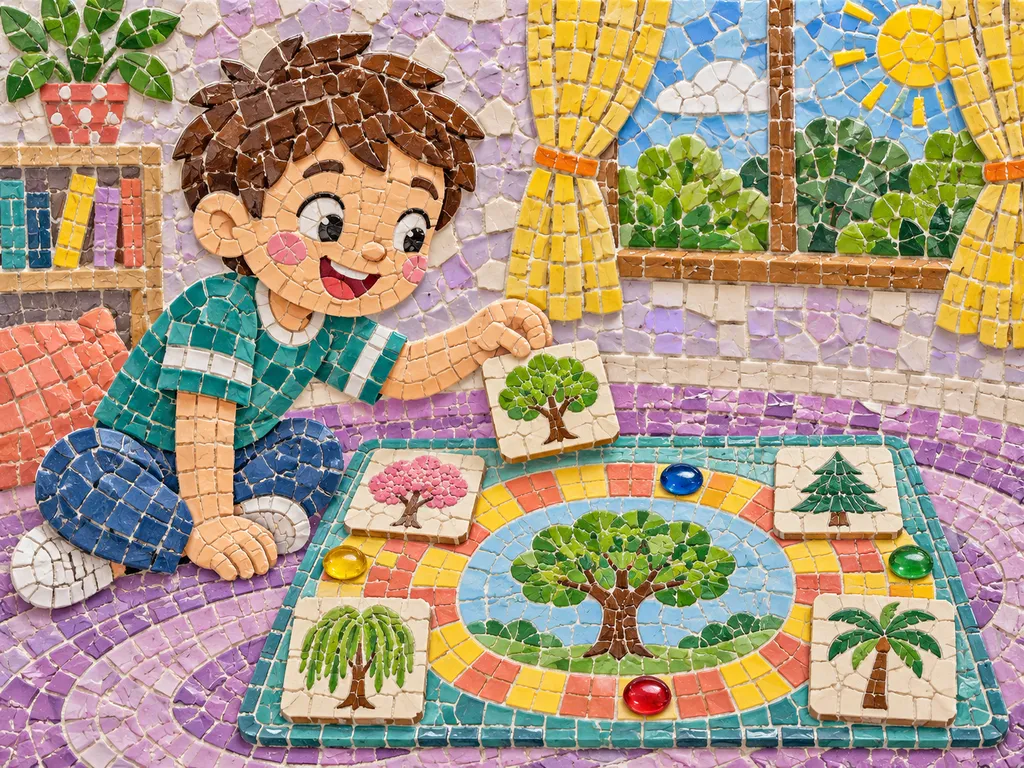
Tree Names in English for Kids need more than picture labels. Put each word into a reusable pattern: “This is an oak tree,” “The pine has needles,” “I can see three palms,” or “Mangoes grow on a mango tree.” Start with short sentences, then add colour, size, place, or season.
Questions activate the words. Ask, “Which tree has acorns?”, “What grows on a lemon tree?”, or “Is this leaf from a maple or an oak?” Accept one-word answers first, then model a full reply: “It is an oak leaf.” This builds grammar without a correction drill.
Older children can compare two trees: “A pine has needles, but an apple tree has broad leaves.” They can explain where a tree grows or how people use its fruit. LearnLink tutors can adjust sentence length while retaining the core word, letting beginners and confident speakers use the same picture.
Try a Tree Detective Round
Choose one tree without naming it. Give three clues: “It has needles. It has cones. It stays green.” Your child guesses “pine” or “fir,” then chooses another tree and gives clues.
Activities for Different Ages
School-age kids: Use three or four large pictures and safe real objects. Place an acorn, leaf, or piece of fruit beside its picture. Say each name slowly, then ask your child to point, touch, or hold up the matching item. Movement is enough now; spoken answers can follow.
School-age kids: Pair tree cards with clue cards. One card might say “willow”; its partner might show long branches hanging towards water. After matching, your child describes each pair. Tree Names in English for Kids fit a quick odd-one-out game: “oak, birch, lemon.” Your child chooses lemon because it is a fruit tree.
School-age kids: Ask for richer comparisons, short descriptions, or a local tree guide. Your child can photograph or sketch five specimens, label their parts, and write two sentences about each. A multilingual child may add home-language names while keeping each English sentence complete.
Practice at Home and Outdoors
Practice with Tree Names in English for Kids fits a walk. Choose one goal before leaving, such as finding three leaf shapes or two fruit-bearing varieties. Let your child observe, then ask for a name and one clue. Never taste unknown fruit, berries, leaves, or seeds, and wash hands after handling outdoor objects.
At home, draw a tree map of your street, courtyard, or park. Add a symbol and English label for each recognised tree. If the species is uncertain, use a general term such as “palm tree” or “evergreen tree.” Describe visible features instead of making an uncertain scientific identification.
Revisit the words across multiple days. First, match names and pictures. Next, cover the labels and recall them. Later, use each name in a question or comparison. Short, spaced practice develops four skills: recognising, naming, describing, and speaking from memory.
Common Mistakes and Simple Corrections
Children may say “an oak” correctly, then copy the pattern as “an pine.” Explain that the article follows the next sound: “an oak,” “an apple tree,” but “a pine” and “a willow.” Practise each whole phrase instead of teaching the article separately.
Children may confuse a tree with something from it. An acorn is not an oak tree; it is the oak’s seed. A pine cone comes from a pine, and an apple grows on an apple tree. Practise “one leaf, two leaves” and “one tree, two trees.” These contrasts expose errors hidden by pictures.
Pronunciation may cause confusion. “Tree” begins with joined consonants, while “three” starts with the tongue sound. Let your child hear and repeat the pair in phrases: “three trees” and “a tall tree.” When reviewing Tree Names in English for Kids, correct one point, then return to sentence meaning.
- Point to three trees and say each English name clearly together.
- Match four tree pictures with labels, then correct misplaced cards gently.
- Read one nature book and repeat unfamiliar tree names after each page.
- Compare two similar species, naming one visible difference before choosing labels.
- Review five tree names aloud, replacing guesses with the correct words.
When a word has several meanings or pronunciations, Cambridge Dictionary is a useful check before turning it into child-friendly examples.
Frequently Asked Questions
Which Tree Names Should a Child Learn First?
The first Tree Names in English for Kids should connect with a distinct image or real place. Oak, pine, apple, lemon, palm, and willow offer strong clues, but choose trees near your family. Begin with four to six names in short sentences. Add words after your child recognises most of the first set.
How Many Tree Words Should We Practise at One Time?
Four to six words suit a short session with a young beginner. An older or more confident child may manage eight to ten, especially with familiar names. Keep the set small enough for comparison without random guessing. Review old words with one or two new ones instead of replacing the full set.
Does My Child Need to Learn Scientific Tree Names?
No. Everyday English names suit early conversation, reading, and nature activities. Scientific names help when an older child studies biology or distinguishes related species. For general English, “oak tree,” “pine tree,” and “date palm” work well. If identification is uncertain, use a broader label such as “fruit tree.”
How Can a Multilingual Family Practise Without Causing Confusion?
Connect the tree with each language, but practise one complete sentence at a time. Your child might name it in multiple languages, then say, “This is an olive tree” in English. A shared picture or real tree stabilises meaning. Use other languages as bridges while keeping the English model consistent.
Start today with four tree names. Point to each tree, say its name, ask for one identifying clue, and finish with one complete English sentence. Review those four names for five minutes on three different days before adding two new words.
A short one-to-one lesson can show what level and pace fit your child — book a trial English lesson.
Stay updated on our latest tips and resources by following us on Instagram LearnLink.